


How Many Types of Construction Jobs Are There in London?
In London, construction jobs cover many roles across housing, business, and city projects. These jobs range from hands-on trades like carpentry and plumbing to office-based roles such as planning and design. The city has one of the busiest building sectors in the UK, with constant demand for skilled workers.
There is no single list of job types because roles change with project size, stage, and need. Broadly, most jobs fall into 4 categories: residential, commercial, industrial, and infrastructure. This guide explains the main types of jobs, what they involve, and the skills you need to work in London’s construction industry.
What Are the Main Types of Construction Jobs in London?
Construction jobs in London fall into 4 main groups. These are skilled trades, site management roles, professional and technical services, and project or support jobs. Each group covers many roles across housing, business, industry, and city projects.
Skilled Trades in Construction Works
Skilled trades are hands-on jobs. They involve the building and upkeep of structures across London. Every site depends on these workers.

Carpentry
Carpenters build and fix frames, roofs, and wood fittings. They also install doors, counters, cabinets, rafters, stairs, and partitions. This makes carpentry one of the widest and most flexible jobs in the trade.
- Entry requirements: Construction Skills Certification Scheme (CSCS) card and carpentry training or an apprenticeship.
- Well-suited to: People who enjoy problem-solving, careful work, and making things that last.
Bricklaying
Bricklayers and masons build walls, patios, fences, and fireplaces. They use bricks, stone, or blocks. The trade is always in demand in London housing and city works.
- Entry requirements: Site Safety Certificate and masonry skills gained on-site.
- Well-suited to: People who like outdoor work and building strong results.
Plumbing / Pipefitting
Plumbers and pipefitters install and repair heating, drainage, and water supply systems. They fit sinks, toilets, showers, and more. Their work also needs skills in welding, soldering, and cutting.
- Entry requirements: National Vocational Qualifications (NVQ) or Scottish Vocational Qualifications (SVQ) in plumbing and a CSCS card.
- Well-suited to: People who like fixing systems and solving technical tasks.
Electrical Work
Electricians install and test wiring and power systems. They also repair lighting, sockets, outlets, and HVAC. Safe electrical work keeps all modern buildings running.
- Entry requirements: Electrotechnical Certification Scheme (ECS) card plus training or apprenticeship in electrical work.
- Well-suited to: People with a good eye for detail and an interest in tech.
Welding / Steel Fixing
Welders and steel fixers join metal and strengthen concrete. They often work with cranes and concrete teams to build safe frames for large sites.
- Entry requirements: Welding certificates and safety training.
- Well-suited to: People who enjoy tough, hands-on work with strong results.
Roofing
Roofers build and repair roofs with tile, metal, or shingle. They make sure homes and offices stay dry and safe from the weather.
- Entry requirements: On-site training or a roofing apprenticeship with a CSCS card.
- Well-suited to: People who are fine with heights and like seeing work from above.
Scaffolding
Scaffolders set up and take down scaffold towers and frames. These give safe access to workers at height. Their role is vital for site safety.
- Entry requirements: Construction Industry Scaffolders Record Scheme (CISRS) card and height safety training.
- Well-suited to: Team players who like active, physical jobs.
Glazing
Glaziers fit glass in windows, doors, and shop fronts. They also work with skylights and display cases. The job blends skill with design.
- Entry requirements: CSCS card plus glazing skills or apprenticeship.
- Well-suited to: Detail-minded people who enjoy neat, precise work.
Plastering & Drywall Finishing
Plasterers and drywall workers cover walls and ceilings with plaster or board. Their work gives smooth, clean surfaces ready for paint or decor.
- Entry requirements: NVQ in plastering or drylining with a CSCS card.
- Well-suited to: People who like neat finishes and creative detail.
Solar Panel Installation
Solar panel fitters install green energy systems on homes and business sites. The trade is growing fast as London shifts to clean energy.
- Entry requirements: Training in solar or electrical systems plus a CSCS card.
- Well-suited to: People who enjoy tech and want to work in clean energy.
Site Management Roles
Site management jobs keep building projects in London safe and on track. They guide workers, run daily tasks, and check that all rules are met.
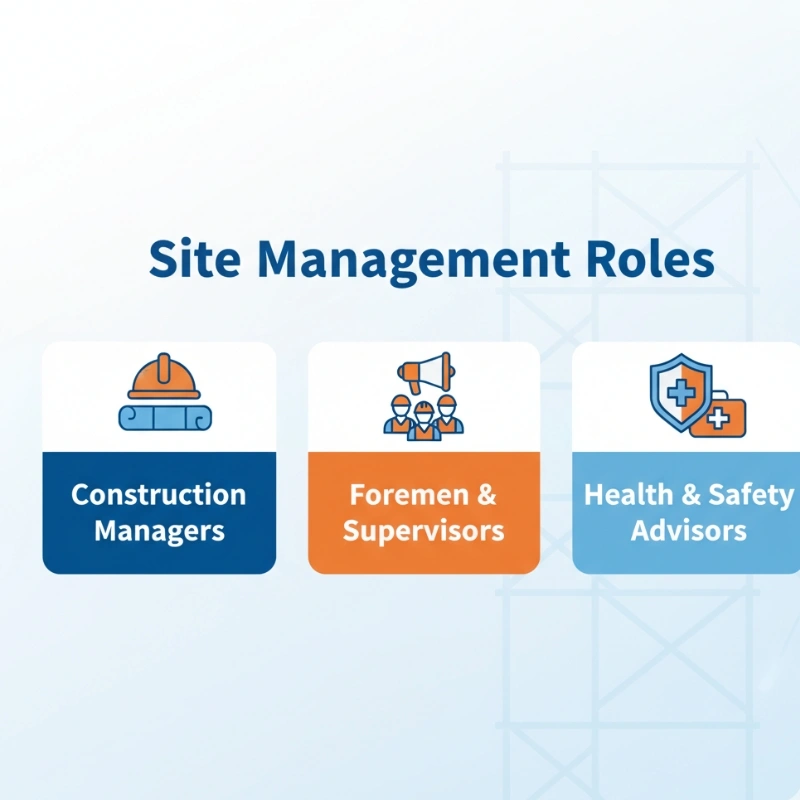
Construction Managers / Site Managers
Construction managers, also called site managers, run the whole site. They lead staff, plan work, and watch deadlines. Their job includes checking budgets, ordering materials, and meeting building codes.
- Entry requirements: Degree in construction management or equivalent experience, plus a CSCS black card.
- Well-suited to: People who can lead teams, handle money, and keep clients happy under pressure.
Foremen & Supervisors
Foremen and supervisors lead small groups of workers. They make sure each task is done on time and to the right standard. They act as the link between site staff and management.
- Entry requirements: A trade background and an NVQ in construction supervision.
- Well-suited to: Skilled tradespeople ready to guide and organise others.
Health & Safety Advisors
Health and safety advisors keep sites safe. They check risks, teach safety steps, and enforce UK health and safety laws. This protects workers and employers from harm and legal issues.
- Entry requirements: National Examination Board in Occupational Safety and Health (NEBOSH) or Institution of Occupational Safety and Health (IOSH) certification plus site safety experience.
- Well-suited to: Careful people who value safety and legal compliance.
Professional and Technical Roles in Construction
These jobs need higher education, certified training, and site know-how. They guide design, cost control, and complex engineering tasks for London projects.
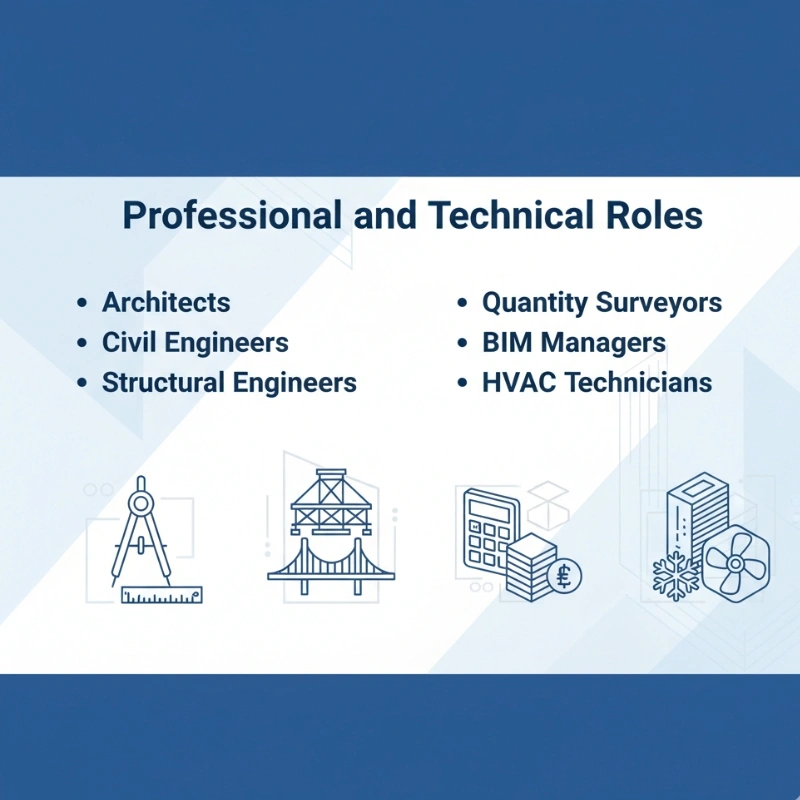
Architects
Architects design buildings that stay safe and meet UK planning rules. They balance energy use with care for old structures. Their work covers layouts, materials, and legal checks.
- Entry requirements: Royal Institute of British Architects (RIBA) degree, Part 3 exam, and Architects Registration Board (ARB) registration.
- Well-suited to: Creative people with strong visual and technical skills.
Civil Engineers
Civil engineers plan and run roads, bridges, rail links, and flood defences. They deliver big projects that keep London moving and safe from rising water.
- Entry requirements: Approved civil engineering degree and ICE chartership.
- Well-suited to: Logical thinkers who like maths and large projects.
Structural Engineers
Structural engineers make sure buildings can take stress, wind, and ground movement. They set load limits, choose materials, and check safety before work starts.
- Entry requirements: Degree in structural or civil engineering and IStructE chartership.
- Well-suited to: Detail-focused people who solve tough physical problems.
Quantity Surveyors
Quantity surveyors track costs for materials, labour, and subcontractors. They write estimates, manage contracts, and watch budgets through the build.
- Entry requirements: Royal Institution of Chartered Surveyors (RICS) degree or MRICS chartership.
- Well-suited to: Numerate people who balance cost and quality.
BIM Managers
BIM managers use Building Information Modelling to create clear 3-D digital plans. They keep an accurate data set for architects, engineers, and contractors.
- Entry requirements: Degree in construction or engineering and advanced BIM training.
- Well-suited to: Tech-minded leaders who enjoy teamwork and digital design.
Building Surveyors
Building surveyors inspect and report on design, upkeep, and repair. They spot issues, plan fixes, and ensure UK legal compliance across London housing.
- Entry requirements: RICS degree and professional membership.
- Well-suited to: Observant people who diagnose problems and give clear advice.
HVAC Technicians
HVAC technicians fit and maintain heating, ventilation, and air-conditioning systems. They keep indoor climates efficient and safe under UK codes.
- Entry requirements: NVQ Level 2 or 3 in HVAC plus a valid F-Gas certificate.
- Well-suited to: Practical workers with mechanical skills and an interest in energy.
Project Planners & Bid Managers
Project planners set work schedules, assign resources, and track progress. Bid managers write tenders and secure contracts from public or private clients.
- Entry requirements: Degree in construction management or equal experience plus project software training.
- Well-suited to: Organised people who mix planning skill with clear communication.
Project and Administrative Support Jobs
These roles handle scheduling, finance, buying, and contract control at every stage of London construction projects.
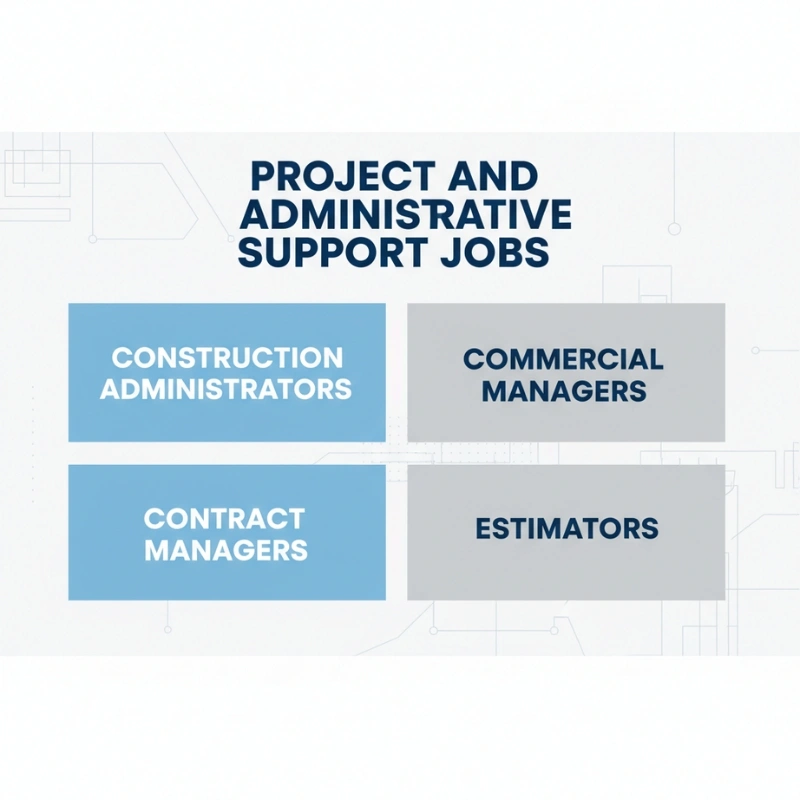
Construction Administrators
Construction administrators keep records and plan site timetables. They prepare permits, file documents, and share updates to keep work legal and on time.
- Entry requirements: NVQ Level 3 in business administration or equivalent site office experience.
- Well-suited to: Organised people who like clear records and tight deadlines.
Commercial Managers
Commercial managers set budgets, agree costs, and watch all spending on large builds. They protect profit and ensure suppliers and subcontractors follow agreed terms.
- Entry requirements: Degree in quantity surveying, construction management, or RICS chartership.
- Well-suited to: Financial experts who combine strong negotiation skills with sharp cost analysis.
Contract Managers
Contract managers buy raw materials and services and enforce contract rules. They draft, check, and track agreements between clients, contractors, and suppliers to cut risk.
- Entry requirements: Degree in construction law or management plus contract work experience.
- Well-suited to: Detail-minded leaders with legal and project skills.
Estimators
Estimators set project costs and timeframes before work starts. They read plans, price labour and materials, and create accurate bids that help win tenders in London’s busy market.
- Entry requirements: HNC or degree in construction or quantity surveying plus cost-estimating software skills.
- Well-suited to: People who enjoy numbers and give precise forecasts.
Which Factors Affect Construction Jobs in London?
The jobs on a building site change with the project and the stage of work. Each factor decides which skills are needed.
- Construction Type: Different builds need different workers. Homes often need carpenters, plumbers, and painters. Office spaces call for electricians, glass fitters, and HVAC teams. Large industrial sites may need steel fixers, crane drivers, or heavy plant staff.
- Specialisation: Some projects hire general trades. Others need very specific skills. Solar fitting, lift work, and complex steel jobs need trained specialists.
- Project Phase: Job needs shift as work moves forward. Planners and designers are key at the start. During the build, bricklayers, roofers, and electricians are in high demand. After handover, maintenance teams keep the site safe and working well.
Knowing these factors helps job seekers and employers match skills to each stage of a project.
Are Construction Jobs in London in High Demand?
Yes. Construction jobs in London stay in strong demand. Major housing, rail, and office projects drive steady hiring. The UK Office for National Statistics (https://www.ons.gov.uk/) states that construction employs 7% of the national workforce.
London shows the fastest rise in job vacancies. Recruiters report clear shortages of electricians, plumbers, and chartered surveyors. Regeneration zones and housing targets keep roles open across both skilled trades and professional teams.
What Skills Do You Need for Construction Jobs in London?
Employers look for essential skills for construction jobs that blend trade ability with strong safety knowledge. You need to learn a craft such as carpentry, brickwork, or plumbing and keep all certificates current. Being able to use modern tools with care is also important. Good teamwork, clear communication, and quick problem-solving help sites stay safe and projects finish on time.
Health and safety awareness is vital, so first aid training and hazard checks protect everyone on site. Most roles need a valid CSCS card, while plant operators and site managers may also need a CPCS card or an NVQ.
Final Thoughts
London’s building sector offers many paths, from trades to design and management. Jobs change with each site, but demand stays high. With steady growth in housing, business, and green projects, skills are always needed. If you want a construction career with choice, growth, and strong demand, working in London is a clear path forward.
Frequently Asked Questions (FAQs)
Q: What are the highest-paid construction jobs in London?
A: Senior roles such as construction managers, quantity surveyors, and chartered engineers often earn the most. These jobs can pay from £50,000 to £80,000+ per year, depending on experience and project size.
Q: Do I need a CSCS card to work in construction?
A: Yes, most roles require a valid CSCS card. It shows you have the training and safety knowledge needed to work on UK building sites. Some specialist roles may also need extra cards or certificates.
Q: Which construction jobs are entry-level friendly?
A: Trades like labouring, scaffolding, and basic site support are good starting points. Many workers also enter through apprenticeships in carpentry, plumbing, or electrical work. These give hands-on training while you earn.
Q: What is the average salary for construction workers in London?
A: Pay varies by role and skill, but most construction workers in London earn between £30,000 and £45,000 per year. Skilled trades and technical staff can earn more, while entry-level jobs often start lower.