


Why Is There a Labour Shortage in UK Construction in 2026 and What Are Its Impacts?
The UK construction industry faces a growing gap between the demand for building work and the supply of skilled workers needed to deliver it in 2026. This imbalance appears when project demand rises, but workforce growth fails to keep pace. Several factors drive this issue, including an ageing workforce, fewer new entrants, reduced training uptake, Brexit-related labour changes, and shifting career preferences. Economic pressure and limited job flexibility also affect workforce supply.
This shortage affects construction projects in many ways. It leads to delays, higher labour costs, lower productivity, and increased safety risks on site. It also limits the number of projects firms take on, which slows overall industry growth.
Current data shows the sector needs around 47,000 to 48,000 new workers each year. This ongoing demand highlights the scale of the workforce challenge across the UK in 2026.
What is a construction labour shortage?
A construction labour shortage is a gap between the demand for building work and the supply of skilled workers available to do it. It occurs when projects increase, but the number of qualified tradespeople and site workers does not keep pace.
This situation often links to an ageing workforce, fewer new entrants, and rising construction demand. As a result, firms face delays, higher costs, and difficulty filling key roles across projects.
What are the causes of the construction labour shortage?
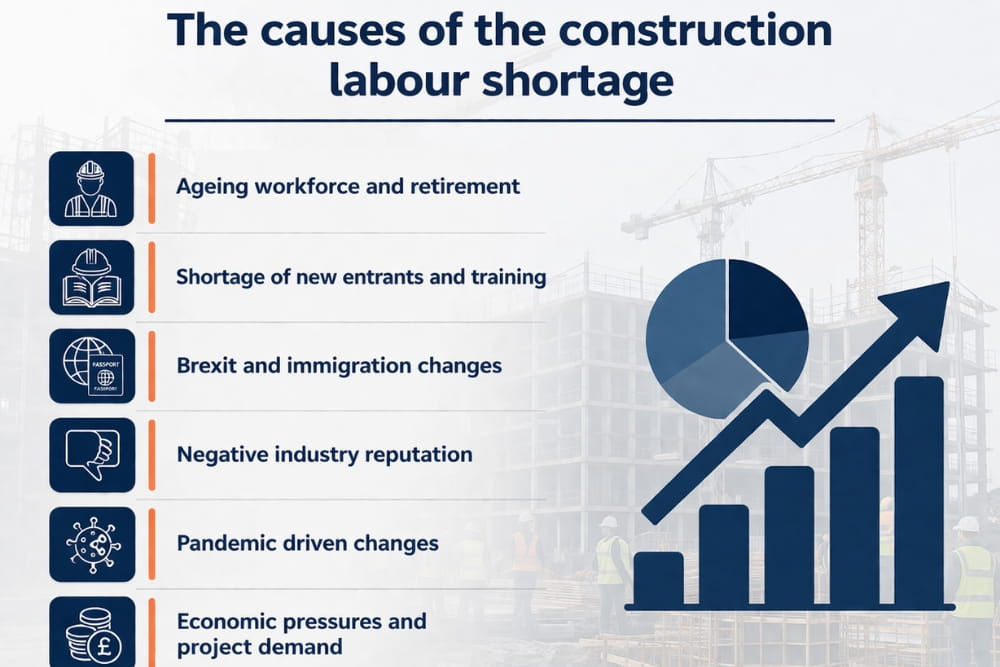
The causes of the construction labour shortage are an ageing workforce and retirement, a shortage of new entrants and training, Brexit and immigration changes, negative industry reputation, pandemic driven changes, economic pressures and project demand, and lower flexibility compared to other sectors.
These factors combine to shrink the available workforce while demand continues to rise across the UK.
The causes of the construction labour shortage are outlined below.
Ageing workforce and retirement
A large share of the construction workforce is approaching retirement age, which steadily reduces the number of experienced workers on site. The Construction Industry Training Board highlights this issue in its Industry Picture 2026 report, which shows a clear structural skills gap. Fewer than 19% of workers are under 25, while 35% are over 50. Around 750,000 workers are expected to retire by 2036, taking critical expertise with them. This trend leaves the industry with more than 140,000 vacancies and a limited pipeline of replacements.
Shortage of new entrants and training
The construction sector faces a weak flow of new workers due to low training uptake and declining interest in trade careers. Apprenticeship enrolment remains limited, while many firms reduce investment in training because of cost and time constraints. High dropout rates further narrow the talent pool. A stronger focus on university education also shifts attention away from vocational routes. As a result, fewer qualified individuals enter the industry each year.
Brexit and immigration changes
The UK construction workforce saw a sharp drop in EU labour following Brexit. The end of free movement led to more than 200,000 workers leaving the sector since 2019, based on data from the Office for National Statistics. London experienced a significant decline in EU workforce participation within a short period. The current visa system adds cost and complexity for employers. This shift limits labour availability and places greater pressure on domestic recruitment.
Negative industry reputation
The building sector continues to face perception challenges that affect recruitment. Many people view construction work as physically demanding and unstable. Concerns about job security and limited career progression reduce its appeal. Younger generations often favour industries that offer better work-life balance. The Federation of Master Builders highlights the need to improve industry image to attract new talent.
Pandemic-driven changes
COVID-19 reshaped workforce behaviour across the construction industry. Many workers left due to health concerns or changing lifestyle priorities. Some experienced professionals chose early retirement during this period. The pandemic also reduced the number of migrant workers entering the UK. Many individuals reassessed career paths, which led to a noticeable drop in workforce participation across construction roles.
Economic pressures and project demand
The UK construction sector faces rising demand from housing, infrastructure, and sustainability projects. At the same time, inflation and material costs increase financial strain on firms. Higher demand requires more skilled labour, yet supply remains constrained. This imbalance leads to project delays and stronger competition for available workers across the industry.
Lower flexibility compared to other sectors
Construction offers less flexibility than many other industries, which affects workforce attraction. Most roles require on-site presence and fixed schedules. Remote work options remain limited. Other sectors provide more adaptable working conditions, which draw workers away from construction. This gap makes it harder for the industry to compete for talent in a changing job market.
What are the impacts of labour shortage on construction projects?
The impacts of labour shortage on construction projects affect timelines, costs, productivity, safety, and business capacity across the UK.
These pressures disrupt delivery schedules and weaken overall industry performance.
- Project delays and extended timelines: Short-staffed teams struggle to meet deadlines, which leads to project delays. A lack of skilled workers slows progress across each phase of construction. Tasks take longer when labour levels remain low, especially during groundwork, structural work, and finishing stages. Delays in these areas push back completion dates and disrupt handover schedules. Contractors also face difficulty maintaining consistent progress across multiple sites.
- Rising labour and project costs: Limited workforce availability drives up labour costs across construction projects. Firms increase wages to secure skilled workers in a competitive market. Overtime payments and subcontracting add further expense. Extended project durations also raise operational costs, including site management and equipment hire. These combined pressures place strain on budgets and reduce overall profitability.
- Reduced productivity and efficiency: Construction output declines when teams operate below required capacity. Smaller crews slow task completion and weaken coordination between trades. Less experienced workers often need closer supervision, which affects workflow. Lower efficiency reduces the pace of delivery and limits the ability to manage larger or multiple projects effectively.
- Increased safety risks on site: Labour shortages lead to greater reliance on less experienced workers across construction sites. Shorter training periods increase the chance of errors during complex tasks. Heavier workloads also contribute to fatigue among existing staff. Reduced concentration and physical strain raise the likelihood of accidents, which affects overall site safety and compliance.
- Reduced capacity to take on new projects: Construction firms limit project intake due to workforce constraints. A smaller labour pool restricts operational capacity and slows business expansion. Many companies turn down new contracts to avoid overloading teams. This trend reduces the availability of construction services across the UK market and affects long-term growth.
How many skilled workers does the UK construction industry need?
The UK construction industry needs a large number of skilled workers each year to meet rising demand and replace those leaving the workforce.
Data from the Construction Industry Training Board shows that around 47,000 to 48,000 new workers are required every year.
This demand comes from:
- Housing targets
- Infrastructure projects
- Net-zero and retrofit work
At the same time, many experienced workers leave due to retirement, which increases pressure on recruitment.
This creates a gap between labour supply and project demand across the UK construction sector.
What are the strategies to solve the labour shortage?
The strategies to solve the labour shortage are skills-based hiring, targeted sourcing, reaching underrepresented groups, training new workers, and using technology with workforce development. These steps grow the labour pool, improve staff retention, and support steady output across the UK construction sector.
- Skills-based hiring: Employers focus on real skills instead of formal degrees. They assess practical ability, attitude, and how a person learns. This approach opens access to more candidates and improves job fit on site.
- Targeted sourcing and proactive talent pools: Recruiters connect with workers before roles open. They build a strong pool of ready candidates. This helps fill roles faster and keeps projects moving without delay.
- Reaching underrepresented groups: Firms reach groups such as older workers, parents who need flexible hours, and people with disabilities. This expands the workforce and adds useful skills and experience.
- Hiring and training inexperienced candidates: Employers choose people who show interest and a willingness to learn. They offer training and apprenticeships. This builds new skills and supports long-term workforce growth.
- Technology adoption and workforce development: Companies use digital tools, automation, and modern methods. These tools improve output and support workers on site. This reduces pressure on manual labour and improves overall efficiency.
Last thoughts
The construction labour shortage shapes the UK industry in 2026, as demand for skilled workers grows faster than supply. This gap links to an ageing workforce, fewer new entrants, and ongoing economic pressure. It affects project timelines, costs, productivity, and business capacity across the sector.
The need for around 47,000 to 48,000 new workers each year shows the scale of this challenge. It reflects both rising project demand and the loss of experienced workers through retirement.
Solving this issue requires clear workforce planning, focused training, and better hiring methods. A recruitment agency helps connect skilled workers with active projects and supports long-term workforce stability.
Frequently Asked Questions (FAQs)
Q: Why is the construction labour shortage increasing in the UK in 2026?
A: The construction labour shortage in the UK is rising due to retirements, fewer young workers, and high project demand. These factors reduce labour supply while work demand continues to grow.
Q: Which construction jobs are most affected by the labour shortage?
A: The construction labour shortage affects roles such as bricklayers, electricians, carpenters, and site managers. These skilled jobs face the highest demand across UK construction projects.
Q: How does the construction labour shortage affect housing projects in the UK?
A: The construction labour shortage delays housing projects and increases build costs. It slows delivery timelines and reduces the number of homes completed across the UK market.
Q: What role do recruitment agencies play in solving the construction labour shortage?
A: A recruitment agency helps reduce the construction labour shortage by matching skilled workers with open roles. It improves hiring speed and supports workforce planning across projects.
Q: How does training help reduce the construction labour shortage?
A: Training helps reduce the construction labour shortage by building new skills among workers. Apprenticeships and short courses increase the number of job-ready workers in the UK.
Q: Is the construction labour shortage a long-term issue in the UK?
A: Yes, the construction labour shortage remains a long-term issue due to ageing workers and steady project demand. This gap continues to affect workforce supply across the UK industry.
Q: How does technology help manage the construction labour shortage?
A: Technology helps manage the construction labour shortage by improving efficiency on site. Digital tools and automation support workers and reduce the need for manual labour.