


Construction Career Guide — How to Get Qualified, Train & Work in the UK
Construction is one of the UK’s biggest and most trusted industries. It offers steady jobs, clear training, and room to grow. People build homes, roads, and green projects that shape daily life. You can start as an apprentice or move into skilled, technical, or management work.
The industry is supported by groups like CITB and CSCS. They help workers get training, safety cards, and the right qualifications. Jobs are available in housing, transport, and energy. No matter your skill level, there is a place for you in construction. This guide will show you how to start, learn, and build a strong career in the UK construction sector.
Why Construction Is a Great Career Choice
A construction career offers steady work, good pay, and visible results. It gives clear paths for growth, whether you start as an apprentice or move into engineering, design, or management. The work is practical and rewarding. Every project helps improve the UK’s homes, roads, and public spaces.

Strong Job Demand Across the UK
Construction employs more than two million people across the UK. Demand for workers stays high due to new housing, transport, and energy projects. Cities such as London, Birmingham, and Manchester are expanding fast. This growth keeps jobs open across many roles and skill levels.
The Construction Industry Training Board (CITB) expects steady growth in all regions. Civil engineering and housing show the most activity. Many areas face skill shortages in bricklaying, electrical work, and plumbing. These shortages make the sector secure and often better paid. Whether you work on-site or manage projects, you can build a stable and lasting career.
Career Opportunities for Both Entry-Level and Experienced Workers
Construction welcomes people from all backgrounds. You can start as a labourer, trainee, or apprentice and gain skills while you earn. Apprenticeships and NVQ qualifications help you learn on the job and gain recognised credentials.
Many UK employers support staff with paid training, trade qualifications, and CSCS cards for site access. As you gain experience, you can move into senior roles such as site manager, surveyor, or engineer. The mix of hands-on work, learning, and career growth makes construction one of the easiest industries to build a future in.
Expanding Roles in Housing, Infrastructure, and Commercial Projects
The UK government continues to invest in housing, transport, and renewable energy. Projects like HS2 and the Thames Tideway Tunnel create thousands of new jobs. The demand for skilled and technical workers keeps rising.
- Competitive pay: Skilled workers often earn above the national average.
- Job security: Ongoing investment ensures steady employment.
- Varied roles: Choose between hands-on trades, technical work, or management.
- Career growth: You can progress into senior roles without needing a university degree.
- Learning opportunities: New tools and building methods keep the job interesting.
- Skill building: Every project helps you learn practical, lifelong skills.
- Rewarding work: Many enjoy seeing real results, such as new homes, schools, or bridges that improve daily life.
A construction career offers more than a job. It gives a reliable income, strong skills, and pride in creating something lasting for communities across the UK.
How to Get Into Construction in the UK
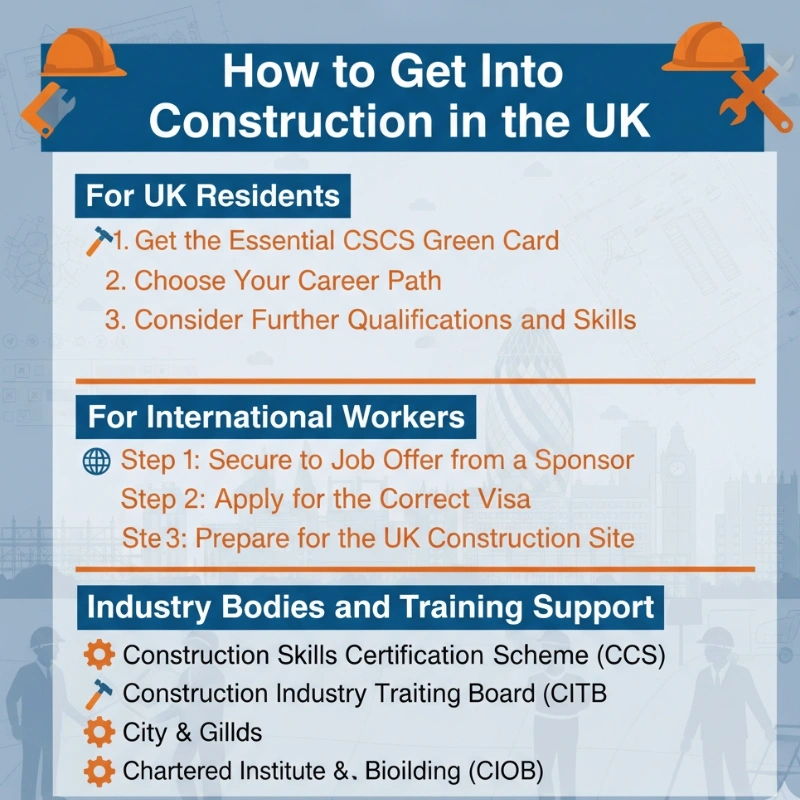
Getting into construction in the UK involves meeting specific entry requirements, gaining safety certification, and choosing a career path that matches your skills and interests. The process is structured, transparent, and supported by official industry bodies such as the Construction Industry Training Board (CITB) and the Construction Skills Certification Scheme (CSCS).
For UK Residents
1. Get the Essential CSCS Green Card
A CSCS Green Labourer Card proves you have the basic safety knowledge to work on a construction site. Pass the CITB Health, Safety & Environment (HS&E) Test, which checks your understanding of on-site safety. Gain the Level 1 Award in Health and Safety in a Construction Environment, a qualification showing that you meet entry-level safety standards.
Complete the training either online or in a classroom through an approved centre. Once done, apply for your CSCS Green Card online.
2. Choose Your Career Path
- Apprenticeships: An apprenticeship allows you to earn while you learn. You gain real work experience while studying for a qualification. Common trades include groundwork, plant operations, bricklaying, and plastering. Most apprenticeships last between 18 months and 3 years and can lead to full-time employment.
- College Courses and Degrees: College courses build technical skills for trades such as electrical installation, carpentry, and plumbing. For management or surveying roles, you can take construction management degrees or conversion courses if you hold a degree in another subject.
Certain jobs, such as chartered town planner or quantity surveyor, require degrees accredited by professional bodies like RICS or CIOB. - Direct Employment: If you already have experience, apply directly for site jobs. Review job descriptions on trusted sites such as Indeed, CITB Careers, or GOV.UK Find an Apprenticeship to identify the qualifications employers require.
3. Consider Further Qualifications and Skills
- NVQs (National Vocational Qualifications): NVQs assess your skills on-site. They are essential for skilled roles such as bricklaying, carpentry, or roofing, and can help you upgrade your CSCS card.
- CPCS or NPORS Cards: You will need one of these if you plan to operate heavy machinery such as excavators, cranes, or forklifts.
- English and Maths: Most entry-level apprenticeships require at least Functional Skills Level 3 or GCSE Grade 3 (D) or higher in English and Maths. Improving these subjects increases your chances of career progression.
For International Workers
To get into construction in the UK as an international worker, you must first secure a job offer from a company with a sponsor licence. You then apply for a suitable visa, such as the Skilled Worker Visa, which requires a Certificate of Sponsorship and proof of qualifications.
Step 1: Secure a Job Offer from a Sponsor
Find construction companies that hire internationally and hold a valid sponsor licence from the Home Office. Ensure the role you are offered appears on the UK’s list of eligible occupations.
Ask your employer for a Certificate of Sponsorship, as it is needed for your visa application.
Step 2: Apply for the Correct Visa
The Skilled Worker Visa is the main route for overseas construction workers. You must meet the points-based immigration requirements, which include a job offer from a licensed sponsor, a minimum salary (usually £26,200 or more), and proof of English language ability.
Step 3: Prepare for the UK Construction Site
Once in the UK, apply for a CSCS card to prove your competence. Pass the CITB Health, Safety & Environment Test relevant to your job role before starting work on-site.
Step 4: Consider Alternatives and Further Qualifications
- Apprenticeships: Some UK employers offer apprenticeships to overseas workers through visa sponsorship, allowing you to earn and train simultaneously.
- NVQs and Other Certifications: Obtaining recognised UK qualifications, such as NVQs, improves your employability. Employers also carry out right-to-work checks and may help with relocation or recognising overseas qualifications.
Industry Bodies and Training Support
To get into the UK construction industry, you can follow routes such as apprenticeships, T-Levels, or university degrees. Most roles start with a CSCS card, which requires a health and safety test. Key industry bodies like CITB and CSCS provide resources, training, and certifications. Colleges and training providers across the UK also offer courses for all skill levels.
Key Industry Bodies and Their Roles
- Construction Skills Certification Scheme (CSCS): Issues cards proving your skills and qualifications. Passing a health and safety test is mandatory.
- Construction Industry Training Board (CITB): Offers apprenticeship information, training resources, and funding for applicants and employers.
- City & Guilds: Provides construction qualifications recognised by the CSCS card scheme.
- The National Careers Service: Offers free courses and advice to help people gain industry-relevant skills.
- Chartered Institute of Building (CIOB): Provides professional memberships and development for those aiming for management roles.
Training and Support Options
- Apprenticeships: Combine paid work with training across trades and technical areas. CITB can help you find and apply for apprenticeships.
- T-Levels: Post-16 qualifications mixing classroom study with practical work placements, often leading to apprenticeships.
- College and Training Provider Courses: Local colleges offer foundation, certificate, and degree-level courses in trades and construction management. Check entry requirements before applying.
- Traineeships: Provide basic training and experience to help you progress into a full apprenticeship.
- University Degrees: Required for advanced roles such as civil engineer, surveyor, or project manager.
- CSCS Health, Safety & Environment Test: Mandatory for most CSCS cards. Book through the CITB website.
- Other Qualifications: Include First Aid at Work or NPORS (National Plant Operators Registration Scheme) for those working with plant machinery.
How to Build a Long-Term Career in Construction
A career in construction can last a lifetime. It offers steady work, good pay, and clear growth paths. To build a lasting career, focus on hands-on learning, skill growth, and strong connections.
Start with the Basics
- Gain site experience: Begin with entry-level work like general labour. These early jobs help you learn safety, teamwork, and how sites run. Each task adds to your skills and confidence.
- Try an apprenticeship: An apprenticeship lets you earn while you learn. You gain real site experience and classroom lessons at the same time. Trades like bricklaying, plumbing, and electrical work are always in demand. This is one of the best ways to start a stable career.
- Get your safety card: Safety is vital in construction. Most UK employers need workers to hold a CSCS card. It proves that you understand safe work practices and can work on site.
Choose Your Path
Construction offers many ways to grow. You can become a skilled tradesperson, move into management, or take on a technical role.
- Skilled trades: After training, you can work as a fully qualified tradesperson. You might focus on renewable energy, welding, or machine operation. These skills are always needed and often well paid.
- Site management: With experience, you can move up to supervisor or site manager. These roles involve leading teams, planning tasks, and making sure projects finish on time.
- Office and technical jobs: If you like planning or design, you can move into roles such as:
- Project Manager: Oversees projects from start to finish.
- Quantity Surveyor: Manages budgets and contracts.
- Civil Engineer: Designs and manages structures like roads or bridges.
- BIM Technician: Creates digital plans for projects.
Each of these paths needs focus, accuracy, and leadership.
Keep Learning
Construction changes fast. New tools, methods, and rules appear every year. To stay ahead, keep learning.
- Grow your skills: Learn digital design tools, management systems, or green building methods. These skills make you more valuable at work.
- Study while working: Many workers study for degrees or certificates while working. You can choose courses in Construction Management, Civil Engineering, or Quantity Surveying. Some study part-time or online to fit around their job.
- Earn professional status: Joining the Chartered Institute of Building (CIOB) or similar bodies boosts your career. Being chartered shows skill and professionalism, helping you earn more and take on greater roles.
Build Soft Skills
Technical skills get you hired, but soft skills keep you growing.
- Communicate clearly: Good communication avoids mistakes and builds trust. Be open and respectful with your team and clients.
- Solve problems fast: Every site faces challenges. Learn to think clearly and act quickly when things change.
- Be flexible: New tools and systems appear often. Adapting fast keeps your skills useful and your job secure.
- Lead and support: Good leaders guide and motivate their teams. Support others, share knowledge, and set a good example.
- Stay fit: Many site jobs are physical. Good fitness keeps you safe and productive every day.
Grow Your Network
Connections can open doors to new jobs and training.
- Build respect on-site: Work well with others. Be reliable and polite. A good reputation brings more chances and recommendations.
- Join industry groups: Memberships with bodies like CIOB or RICS help you find courses, events, and job boards. You’ll meet mentors and employers who value your dedication.
- Be active online: Keep your LinkedIn up to date. Add your skills, projects, and certificates. Employers often search online before hiring.
- Find a mentor: A mentor can guide your growth and help you make better choices. Many companies and trade groups offer mentorship schemes for new workers.
What Are the Key Construction Career Paths in the UK
There are many types of construction jobs in the UK. Each path suits different skills and goals. You can work in skilled trades like bricklaying, plumbing, or electrical work. Some people choose design or engineering jobs, such as architecture or civil engineering. Others go into management, like construction or project manager roles.
There are also specialist jobs in quantity surveying, land surveying, or health and safety. You can start through an apprenticeship, a training course, or a university degree.
Skilled Trades (Bricklaying, Plumbing, Electrical)
Skilled trades are the core of the construction industry. These jobs use practical skills to build, repair, and maintain structures. Common roles include bricklayer, carpenter, plumber, electrician, and decorator. These workers make sure every project is safe and well built. Skilled trade jobs are steady, active, and rewarding.
Technical and Engineering Roles
Technical and engineering jobs focus on design, planning, and safety. They suit people who enjoy solving problems and paying attention to detail. Common roles include architect, civil engineer, structural engineer, and building services engineer. These jobs help make buildings safe, energy-efficient, and modern.
Management and Surveying
Management and surveying jobs bring together leadership and planning. Workers in these roles guide teams, manage budgets, and check that work meets quality standards. Common roles include construction manager, project manager, quantity surveyor, and building or land surveyor. These careers offer strong pay, respect, and long-term security across the UK construction sector.
How to Become a Road Worker in the UK
To become a road worker in the UK, you need basic skills, training, and experience. Most people start through apprenticeships or entry-level jobs. These roles let you learn while working. A Construction Skills Certification Scheme (CSCS) card is needed to work on-site. It proves your safety knowledge and skills.
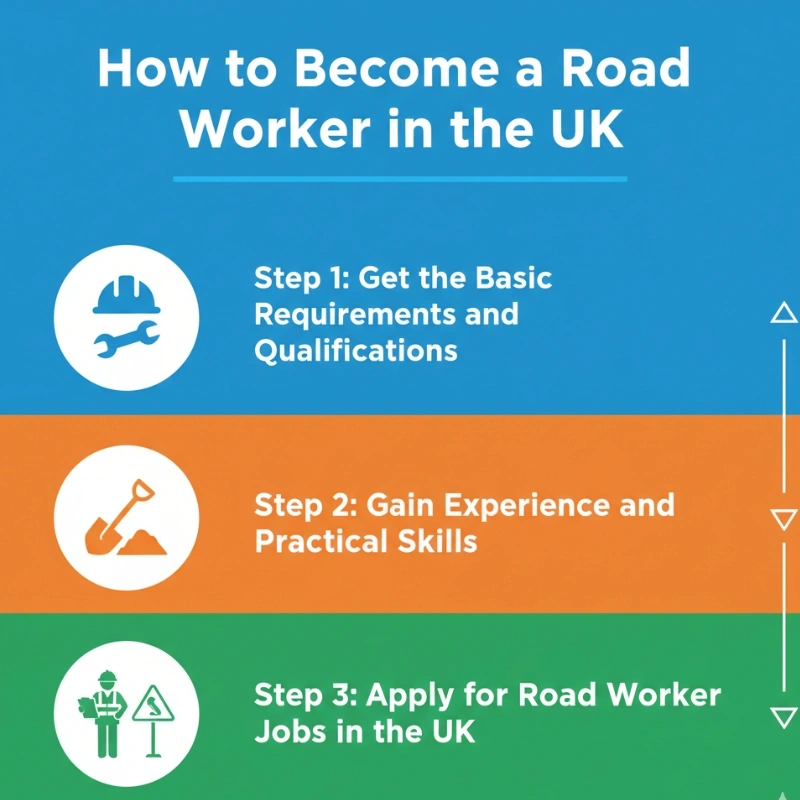
Step 1: Get the Basic Requirements and Qualifications
- Be at least 18 years old: You must be 18 or older for most jobs. Many roles involve using machines or working near traffic.
- Get a CSCS card: You must hold a valid CSCS card or a similar qualification to work on construction and highway sites in the UK.
- Street Works Qualification Register (SWQR): Anyone working on public roads must register under the Street Works Qualification Register. The New Roads and Street Works Act (NRSWA) says every site must have one qualified operative and one qualified supervisor.
The main SWQR certificates include:
-
- LA: Location and avoidance of underground apparatus
- O1: Signing, lighting, and guarding for safe traffic control
Other O-series units: Cover excavation, reinstatement, and related work.
- Obtain a driving licence: A UK driving licence is often required to move between work sites. An HGV licence helps if you drive large vehicles.
- Pass health and safety tests: You must pass a Health, Safety, and Environment test before working on any site. It proves you understand safe work practices.
Step 2: Gain Experience and Practical Skills
- Consider an apprenticeship: Apply for an apprenticeship in road surfacing or highways maintenance. It helps you earn and learn practical skills at the same time.
- Gain work experience: Short-term jobs or work placements can help you understand the job. They also make your CV stronger.
- Pursue college qualifications: A diploma in construction operations or highways maintenance improves your skills. It is not always required, but adds value.
Step 3: Apply for Road Worker Jobs in the UK
- Search for jobs: Look for openings titled “highways operative,” “maintenance worker,” or “road worker.” Check local councils or construction job sites.
- Apply directly to employers: Send your application to road maintenance or civil engineering companies near you.
- Use your new skills: Show your qualifications and safety training in your job applications. Employers like candidates who are reliable, skilled, and safety-aware.
Following these steps helps you build a stable and rewarding career as a road worker in the UK.
How to Be a Good Civil Engineer
To be a good civil engineer, you need clear thinking, solid skills, and steady focus. This job is not just about design. It is about building safe, strong, and useful structures that people rely on every day.
What Civil Engineers Do in the UK
Civil engineers plan, build, and look after key parts of daily life. They design roads, bridges, buildings, and water systems. They use computer tools to make sure every plan is safe and works well. In the UK, engineers often choose areas such as structure, transport, water, or ground design.
Main Tasks
- Planning and Design: They study the site, take notes, and use computer design tools (CAD) to make drawings and plans.
- Construction: They check that work on site follows safety rules, budgets, and the design plan.
- Maintenance: They test and inspect old work to make sure it stays safe for years.
- Project Management: They handle time, money, and teams. They work with clients, architects, and local offices to finish jobs on time.
Where Civil Engineers Work
Civil engineers help shape how towns and cities grow.
- Buildings: They help design and build homes, offices, and factories.
- Transport: They work on roads, railways, bridges, and airports that keep the UK moving.
- Water and Environment: They design drains, flood walls, and clean water systems that protect people and nature.
- Energy and Infrastructure: They build power plants and renewable energy sites that serve local needs.
Civil engineers often work with surveyors, planners, and builders. Together, they make sure each project meets safety laws and quality checks.
Education and Qualifications
To start, most engineers take a degree in civil engineering. The best option is one approved by the Institution of Civil Engineers (ICE).
- Chartered Engineer (CEng): You need a Bachelor’s degree and a Master’s or higher study, such as an MEng or MSc.
- Incorporated Engineer (IEng): You can reach this level with an approved Bachelor’s degree.
- Technician Route: You can start with a Level 3 diploma, HND, or an apprenticeship in civil engineering.
Best Subjects to Study
- At School: Maths and physics help you understand how things move and stay strong. Geography and geology show how land and soil behave. Computer skills are useful for design work.
- At University: Civil engineering is the main course. You can also study maths, geology, or environmental science to gain useful skills for the field.
Key Skills You Need
- Technical: Know how structures, materials, and water systems work.
- Digital: Use CAD and design software to make plans.
- Maths: Use numbers and data to check if designs are safe.
- Creative Thinking: Find new ways to solve problems and improve designs.
- Time Skills: Plan work, set goals, and meet every deadline.
What Is the Future of Construction Careers in the UK?
The future of construction jobs in the UK looks bright. The government is investing in better roads, housing, and green buildings. New tools like Building Information Modelling (BIM), 3D printing, and eco design are changing how work is done. People who learn these new skills and use digital tools will do well. As the UK moves toward clean energy, jobs for electricians, roofers, and engineers will keep growing.
Final Thoughts
Construction in the UK offers good jobs and strong careers. It is a place where people learn, grow, and feel proud of their work. You can start with simple skills and move up to bigger roles. Every job helps you build knowledge that is always needed.
The UK keeps building homes, roads, and green energy sites. This means more jobs for people who are ready to work and learn. With the right training and safety card, you can have a safe and rewarding career. Construction is not only about making buildings. It is about creating places where people live, work, and grow together.
Frequently Asked Questions (FAQs)
Q: How can I apply for a CSCS card and how long does it take to receive it?
A: You can apply for a CSCS card online through the official CSCS website. First, you must pass the CITB Health, Safety, and Environment test. Then, submit proof of your qualification or training that matches the card type you need. Once approved, your CSCS card usually arrives within 7–10 working days.
Q: What are the highest-paying jobs in the UK construction industry?
A: The highest-paying jobs in construction often include site managers, project managers, civil engineers, quantity surveyors, and construction directors. Skilled trades such as electricians, plumbers, and steel fixers can also earn strong wages, especially with experience or specialist certification. Salaries vary by location, experience, and project type.
Q: Can I work in UK construction without a degree?
A: Yes, you can work in UK construction without a degree. Many entry-level roles, such as labourers or groundworkers, do not require formal qualifications. However, you will need a Construction Skills Certification Scheme (CSCS) card to work on-site. Apprenticeships are another route, offering paid, hands-on training and qualifications from Level 2 up to degree level.
Q: What qualifications do I need to start working in construction in the UK?
A: To start working in construction, you typically need basic safety training and a valid CSCS card. Some trades may also require an NVQ or diploma in a relevant area, such as bricklaying, plastering, or electrical work. If you are new to the industry, an apprenticeship or entry-level course through CITB or a local college is a great place to begin.